Thursday, December 29, 2011

Top Three Most Viewed Blog Posts Linky Party

By Denise Krebs, Children's Literature Moderator

I started this Children's Literature blog during the summer of 2011, inspired by my Children's Literature college students. It is a blog where anyone is invited to submit posts about children's literature. We've had twelve submissions so far coming from Canada, United States, New Zealand, and Australia, written by college students, librarians, junior high and elementary teachers, and a writer-principal.  One of my seventh grade students is working on a post now.

Now, as part of the Top Three Most Viewed Blog Posts Linky Party by Fern Smith, the three Children's Literature posts that were most viewed in 2011...

The first post on our blog, and the most viewed post, came from Nancy Carroll, a fourth grade teacher from Massachusetts. She wrote about the Donalyn Miller's The Book Whisperer. Read her post here.


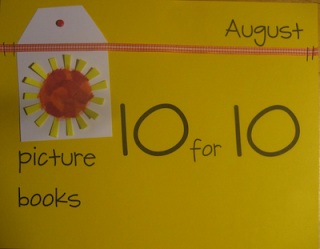
The next post was on August 10, 2011. This was Picture Book 10 for 10, a wonderful serendipitous children's literature community event on August 10.  Teachers, students, parents chose their best ten children's books and wrote about them. I wrote this post with my children's literature students. We each chose two books that were must haves for our children's literature library. Read our choices here.


The third most popular post was written by Julie Swenson, college student extraordinaire. She wrote a wonderful review of the book Escape from Slavery: Five Journeys to Freedom. Read it here


Thanks to Fern for planning this Linky Party, and for you for reading this post.  If you are interested in children's literature too, I hope you will read the Writer's Guidelines and consider joining us.


Friday, December 2, 2011

Latte and Literature

By Lyn Howlin, Children's Literature Blogger
 
This year I have been privileged to be invited to a series of Latte and Literature afternoons.

These very social gatherings are held about every 6 weeks in a coffee shop.

Natalie with some of her many books.
Natalie, an ex-teacher, who now works in a book store, brings along the latest selection of children’s books. She has always researched them well and is able to give us a story outline and draw our attention to particular features in layout design, written or visual text.

The group who attends this very social gathering are a mixture of teachers, teacher-librarians and student teachers.

The books seem to provide a springboard for a great exchange of ideas and views. There are always wonderful discussions about other books by this author or illustrator and suggestions as to how this book may be used in the classroom to enhance teaching. Sometimes we just enjoy the book.

One of our student teachers, Kate Booth, keeps track of the books we discuss and adds further information about them on her Captain Flint blog. We also enjoy the latte (or milkshake in my case) and the getting together with like-minded people.

It really is a fun way to spend time sharing and learning more about the amazing range of children’s books now available.

Image taken by OzLyn and used with permission.

Thursday, September 15, 2011

Children's Literature and Essential Questions

By Denise Krebs, Children's Literature Blogger

One Saturday afternoon I was trying to organize for my coming week at school--plan lessons, print needed handouts, grade papers. You know...the never-ending tasks of teacherhood.

As I often do, though, I became lost in my Google Reader. (I'm finding my RSS reader bewitches me; hours can go by while I catch up on the blogs I follow, seeing what others are learning and reflecting upon.) On the afternoon in question, I enjoyed most-of-all Tracy Watanabe's post about essential questions.


In the comments on Tracy's post, I mentioned I was not a faithful user of essential questions. I've known about them since Understanding by Design and the Intel Teach to the Future program I was involved in more than ten years ago. However, I have not always remembered to use them in my teaching. Tracy's post reminded me of their importance. Then, again in the comments section, she responded back to me with an example of how she used an essential question with the book Ramona Quimby, Age 8.

Tracy wrote:
"I remember the first time I used an essential question, it was when I was a 3rd grade teacher, and we were starting Ramona Quimby, Age 8 (I love Beverly Cleary books!) My EQ was something like, "What does a 'sticking-together' family look like?" -- There was one discussion about cause-effect based on something Ramona Q did in the book, and the kids decided that she had a choice in how she responded... and her response would affect the whole family... so when things came up in their own lives, they shouldn't take it out on their own family... This conversation was 10 years ago, but I remember it so well because I was amazed at what those little 8 year olds were realizing about being proactive in their choices, all from a literature discussion. Furthermore, I don't think our conversation would have gone that direction without that EQ."

So the next day, as we discussed our book Among the Hidden, my students were asked an essential question I found hereHow much control should government have? We had such a fascinating conversation with that question that I had them write our essential question inside the front cover of their book copy.

As the book continued to progress we saw more signs of the unbridled control of government in this futuristic totalitarian society. The people were required to only have two children. They weren't allowed to grow food hydroponically, even though there was a purported food shortage. We continue to ask questions about why "they" (the government) could do those things and how they could get away with it.

I asked my students to help me write this blog post by sharing some of their thinking to the essential question of Among the Hidden. Here are some of their responses.
The government should have some control of our lives, but no more than two kids is really too much that they are asking for.
The government shouldn't tell us what we can and can't buy, unless it's illegal drugs. The government shouldn't tell us how many kids that we can have. The government shouldn't shut down food companies because it is unhealthy. They should have a little control. If they do things we don't like we can protest.
Government should protect us from harming ourselves and others. The government shouldn't tap our phones and barge in and take control.
I think that the government should watch us, but not control our everyday lives.
Absent Anna chatted from grandma's.
The purpose of government is to make safe rules, but if they go over and beyond that fact, then we have a right to protest for what we believe is right. The government should not make pathetic rules like they did in this book.
We need to trust our government. Otherwise, we could do whatever we wanted and there would be a lot of killers in the world.
We should be able to do anything that isn't harmful or dangerous. The government should just try to keep things fair and safe.
I don't think the government should have as much power as they do now.
The purpose of government is so nobody gets out of control.
If the government gets too powerful we can protest, strike, boycott, and vote people out of office.

We are not quite finished with the book, but before we finish, my students will see that the government asserts ultimate evil authority when it kills some young protestors.

With this one piece of children's literature, we have been invited into engaging and important conversations. We are discussing world issues like the differences between elected and non-elected governments, our Bill of Rights, liberal vs. conservative governing, protests in Libya, Egypt and Syria, as well as important personal liberty issues.

Had Tracy not challenged me when she shared her use of an essential question with Ramona Quimby, I don't believe we would have had so many great discussions focusing on the theme of Among the Hidden. So, will you join Tracy and me in this conversation?

What is an essential question you've used with a children's book?
Will you share it on this Google spreadsheet
Or on a comment below. 
Thank you! 

Sunday, September 11, 2011

Growing Lifelong Readers

By Kathryn Trask, Children's Literature Blogger

I have always loved reading. When I was growing up in a small town in New Zealand, in the 1950’s there weren’t that many books available. I was always on the prowl for a book I hadn’t read. At that point in time, we only had a small family lending library that you could only get to by car. Occasionally the family down the road gave me a ride there.

Now, as a teacher, there are endless possibilities for reading material for my students. As a lover of reading, it has always been my mission to connect my students with all the exciting books available for them. One common thread running through my classroom in my thirty-five years of teaching plus, is the desire to have my students love books and reading. Although in saying that, the local Resource Teacher of Literacy, when she heard I was taking a 10-week paid sabbatical in 2012 commented, “Well there’s no need to ask! You will be doing something with ICT.” And she is right; I am going to be exploring digital literacy. I see it as an extension to my love of reading.

Ever since I taught my first class back in the early 1970’s, I have read to my class daily. Occasionally some of the books had to be abandoned, but most were relished by the class. At the beginning of this year I chose to read to them Because of Mr. Terupt by Rob Buyea.
My first decision with this book was whether to get it on my Kindle or buy the hardback. Finally, the hardback won, because I know that if a book is successful, many children in the class are going to want to read it for themselves after I have read it to them. With this book, that was certainly the case, and at present is passing from hand to hand.

Because of Mr. Terupt is a book about a classroom of children who have a very wonderful teacher who helps them negotiate the challenges in life. Then one day because of something one of the students does, the whole world swings on its axis for them. The book is told from a number of different viewpoints. The reader gains insight into seven of the students and sees often the same event through their eyes. Along with the students in the book, the reader waits to see what the outcome of the key turning point in the story will be.

My class loved this book; there were always groans when I finished each day. It is rather cleverly written, so that at the end of a chapter, the reader wants to get to the next. I assured my class this was not my fault! Rob Buyea was the man responsible.

At the end of the book, I decided to track down Rob Buyea. He lives on the east coast of America. Through a number of emails, we eventually arranged a time and date and set up a Skype session with him. He graciously agreed to Skype us in what was his mid-evening and was our midday, of the following day! We spent one wonderful hour discussing the book. We were delighted to hear that in 2012 there is a sequel to this book. He read us the first page. Definitely one I will put on pre-order!


When reading to my class I provide them with a variety of books. We have some excellent New Zealand authors, so I generally alternate between our own and overseas authors. This term we are listening to an audio production of Lion Boy by Zizou Corder.
This is the first in a trilogy. I hope that after listening to this one, they will want to read the next two for themselves. The three books are already sitting on the class library shelves.

I have always encouraged the students to read for pleasure and to read books of their own choice. I have been fortunate over the last few years to have avid boy readers. These boys have encouraged others to read by their recommendations. Some of these boys have been hooked into reading in this way.

One such set of books are The Five Ancestors series by Jeff Stone. Other series that are very popular are the Percy Jackson books and The 39 Clues series both by Rick Riordan.

Just recently I have started to use the Daily 5 way of structuring my literacy block. Those who have heard of this will know it comes from The Two Sisters, Gail Boushey and Joan Moser. This is a way of structuring the Literacy block so that it frees up the teacher to work with groups and individuals while the students engage in writing, vocabulary work, reading to self, reading to someone and listening. At present, a number of boys are choosing to listen to The Hobbit as part of this. It came as a request from them. As I always want to foster a love of books and reading, I made this happen for them.

Saturday, August 27, 2011

Escape From Slavery: Five Journeys to Freedom

By Children's Literature blogger, Julie Swenson

This was a BVU college course assignment done in my Children’s Literature class. Students were asked to read a non-fiction book, summarize and respond to what we read, plus come up with a graphic organizer, to further our understanding of the reading material. This was my assignment.

The book Escape from Slavery, by Doreen Rappaport contained five stories about slaves who escaped their owners to gain what all people deserve--freedom. The first story told of a mother and her daughter escaping from her master’s home and crossing a half frozen river to leave the slave state of Kentucky and reach the free state of Ohio. The mother and daughter left for Canada using the Underground Railroad.

The second story told of two slave girls, who were running from their slave owner and the law. The two girls were being hidden at a place called Cabin Creek. They were made to look like boys, so their pursuers would move on, giving them the opportunity to flee again. They were taken farther away from their hiding place, finding a new secret hide-out, until they eventually moved on with the Underground Railroad to the country of Canada.

The next story narrates an unusual means of escape. A man traveled by horse and wagon, hidden inside a two-and-a-half-foot wide, three-foot long, two-foot-eight-inches deep box. The slave stayed inside this box for two days living on what little water and biscuits he stored with him inside the box. He eventually reached his destination and continued working toward his freedom. He, too, made it to Canada.

The fourth story tells of a slave woman named Jane and her two children who also desire freedom. The master was thinking of selling the slave woman’s sons and she would not have it. She already lost her oldest son, due to the master selling him last year. They left for New York, as the master’s plan was to have her sons leave for Nicaragua to be sold. The master told the slave woman not to talk to anyone, but Jane stopped another woman and told her she was a slave and that she and her children wanted to be free. The woman helped her out. Eventually, two men came up to Jane, her sons, and her master, and told Jane she hds the right to be free. The master angrily told the two men that Jane knew her rights and she was free if she wanted to be. Jane said she would like to be free, but knew she wasn’t because she belonged to her master. She and her two sons left with the two men. Her master became angry and tried to grab Jane. He raised an uproar and had the two men, plus a few other colored men who helped Jane and her boys get away, thrown in jail. He claimed his slave and the two boys were kidnapped. Jane had to testify against her master, claiming she was not kidnapped and that she left in order to gain freedom. Jane and her children left for Canada by the Underground Railroad.

The last story described how a man and a woman, who were slaves, fooled many people to gain their freedom. The slave woman was born to a black woman and a white man, and her color was as close to white as it could be. They decided to disguise her as being an old, fragile, and sick white master, who was escorted by “his(her)” slave. They cut her hair short and she wore a bandage around her face, to hide her womanly features. They placed her arm in a sling, so she wouldn’t have to sign any documentation. She faced people she knew and many strangers, but no one recognized her as a woman. They had obtained their freedom by pretending to be someone else. The two had moved to another country, but eventually moved back to the United States and bought a plantation.

All the stories in this book were good and there are so many points of discussion a class could have (fear, courage, freedom, the Underground Railroad, escape, thoughts about slavery, happiness, sadness, a person’s rights, the 13th Amendment, justice). I am sure there are many more good books that talk about the slavery time period. Lessons could probably go on for at least two weeks. I kept debating whether this book was fiction or non-fiction, since it was told in story-form, but after reading about the author and her research, I put my mind to rest that this was a non-fiction book. I think this writing style pulled me into the book deeper. This book would be a great addition to a teacher’s classroom library!

Suggested teaching resource from HarperCollins.

The Children's Literature class enjoying ice cream on the last day of class. Julie Swenson is on the far right.

Wednesday, August 10, 2011

August 10 for 10 Picture Books

By Denise Krebs, et al, Children's Literature Bloggers


Thanks to Mandy Robek and Cathy Mere who created the wonderful challenge August 10 for 10 Picture Books. This is the second annual event.

This summer I have the wonderful privilege of teaching three students in an undergraduate education course called Children's Fiction and Non-fiction at Buena Vista University in LeMars, Iowa. We have a wonderful time sitting around a table reading and discussing children's literature. What could be more fun for someone who loves children's books? We decided to do a collective August 10 for 10 Picture Books. It was not easy to come to a consensus, so we each picked two and the last two were classics we all liked.

Christy Walrod

One picture book a classroom cannot be without is Tops & Bottoms by Jane Stevens. This book has a great message for children to learn. In the book, Hare tricks the lazy bear into giving him the best part of the harvest.
The moral of this story is the one who works the hardest reaps the reward. My favorite part is how the lazy bear is always surprised at his share of the crop.
A second book that is great for the classroom is A Bad Case of Tattle Tongue, by Julia Cook. This book teaches children life skills about when tattling is appropriate. The book also has a fun, silly phrase that keeps the children’s attention, as well as great illustrations throughout the book. This book is a great resource for teachers to help lessen tattling in the classroom.

Julie Swenson


I have been collecting many picture books, and I can’t wait to add them to the classroom I will be hosting someday. One of the books is titled The Story of Ferdinand by Munro Leaf. This is a classic book that was loved by children many years ago and is still loved today. Ferdinand is a bull who is content to sit under his favorite tree and smell the flowers. All of the other bulls would run, jump, and butt heads with each other, because someday they hoped to be picked for bull fighting. As time went along, the bulls grew, but Ferdinand grew large, larger than all of the other bulls. One day, some men came to look for the biggest, meanest, and toughest bull to fight in the bull fights. Ferdinand was spotted, after he had sat on a flower occupied by a bumblebee. This bee stung Ferdinand and you can probably imagine what happened next. Well, the men picked Ferdinand for his mad and fierce performance, so Ferdinand was hauled to Madrid, Spain, by cart. Once Ferdinand entered the arena, he spotted all the flowers resting in the ladies’ hair and he began to smell their lovely fragrances. The men who were to fight Ferdinand could not get him to budge. They could not engage him in bull fighting. The men grew angry trying. They were fed up with Ferdinand, so they took him home. I love this book, because it goes with the saying, you can’t judge a book by its cover. Even though large is considered strong and mighty, one must not assume this is always true. Even the strong can be fragile and the mighty can be soft-hearted. Children and bulls come in all shapes and sizes, including their hearts. This book also says that it is OK to be different, because not everyone enjoys the same things.

One of my favorite books when I was a kid is called Blueberries for Sal written by Robert McCloskey. This is a story about a surprise mix-up. Sal and her mother went to Blueberry Hill to pick blueberries. Mother wanted to can some for winter. They both carried their own tin pails for picking and Sal found it hard to resist eating her collected blueberries. So, Sal started taking blueberries from her mother’s tin pail. Mother told Sal, to run along and pick her own berries.
Sal decided she would sit and eat what she picked. On the other side of Blueberry Hill a mother bear and her cub were looking for blueberries. The mother bear had told her cub to eat as many as he could, because the cub needed to fatten up before winter. The little cub would stop from time to time, to eat blueberries and found that he needed to catch up with his mother. Somewhere between all the eating of blueberries, Sal and Little Cub found themselves following what they thought was their mother. Sal was following Mother Bear and Little Bear was following Sal’s mother. When both mothers realized this, they were surprised. Sal’s mother and Mother Bear both backed away from their surprises. They knew that humans and bears were not to trust each other. Soon, both mothers had found their original little ones eating and munching on berries. Both families continued on their hunt for more blueberries. I like this book, because of its surprised mix-up. Kids can relate to the temptation of eating blueberries and some mothers can relate to reminding their child(ren) to keep up, or saying “Oh my goodness, where did my child go?” This is a good lesson for children to stay close to their parents and it is good reminder for parents to keep close tabs on their children.

Natasha Iwen

The first picture book that comes to my mind is The Very Hungry Caterpillar by Eric Carle. This book follows a caterpillar as it eats multiple foods before turning into a butterfly. This is a great book to use in the classroom because you can use it when working with counting, the days of the week, foods, and a butterfly's life stages.


The second picture book that I think of is Chicka Chicka Boom Boom by Bill Martin, Jr. and John Archambault. I remember my teacher singing this book to us to teach us the alphabet. The book starts off with letters climbing up the coconut tree in alphabetical order and then the tree ends up collapsing. Then the capital letter come to help them. This is a fun book because it rhymes and has a good rhythm that children can really get into.


Denise Krebs

A picture book I can't live without is George and Martha by James Marshall. The subtitle says it all--Five Stories about Two Great Friends. The stories are short and to the point, each one about friendship. My favorite is when George--trying not to hurt Martha's feelings because he doesn't like her pea soup--pours his soup into his loafers while she is in the kitchen. Outrageous, yes, and funny too. With Marshall's warm and wonderful humor and precise word choice, how can children and adults not fall in love with the two friends? George and Martha are the most winsome beady-eyed pachyderms in the picture book world!

My second choice has to be an ABC book--Dr. Seuss's ABC. When I was six, my mom enrolled me in a book club where I received two easy readers each month. (Being one of the youngest of seven children, I knew how special this was!) Some of the classic titles I received were Green Eggs and Ham, Are You My Mother?, Hop on Pop, and Put Me in the Zoo. One of my favorites as a child and to this day, is Dr. Seuss's ABC. "Big A, Little a, What begins with A? Aunt Annie's alligator...A...a...A. Big B, Little b, What begins with B? Barber, baby, bubbles, and a bumblebee..." I still have much of it memorized! The lyrical writing and crazy pictures make it a favorite of beginning readers. I also have a huge collection of other ABC books; this title was my very first.


Where the Wild Things Are is a classic children's book by Maurice Sendak. It is a beloved story of a child who can become king of his own domain. It won the Caldecott Medal in 1964 and will celebrate its 50th anniversary in a couple of years. Every young child can appreciate getting in trouble for being too wild. Max is empowered by his imagination in this lovable book.
Brown Bear, Brown Bear, What Do You See?, by Bill Martin, is one of those books that every young child should read, recite, illustrate, act out, etc. One can get a lot of mileage out of this book in an early childhood classroom.

Here is the link to the JogtheWeb collection of #PB10for10 participants. We are #11.

Monday, August 8, 2011

Write Lit


By Sheri Edwards, Children's Literature Blogger

“Around the back is a yard, mostly dirt, and a greasy bunch of boards that used to be a garage. But what you remember most is this tree, huge, with fat arms and mighty families of squirrels in the higher branches.” from Sandra Cisneros, (2009) The House on Mango Street. Random House, New York. p. 22.

Are you there in those high fat branches with a squirrel chattering at you? Oh yes, a good book sends you into other worlds and situations, adding to what you know by connecting to what you’ve experienced. A good book lives inside you as your mind imagines through the images created by the words in that book.

I teach reading and writing, so I love books that allow me to share how a story’s world depends on the writer’s words.

One of those books is The House on Mango Street by Sandra Cisneros. The 2009 Vintage Books Edition from Random House includes an introduction by the author in which she shares how she writes--and how she combines real characters and changes real settings to bring out the idea in her story so the reader can imagine the world and relationships she knows. She also shares how she did not trust her own voice, and that she succeeded by doing the things she was afraid of. I read aloud pages xxii to xxvii of the introduction so students understand how writers are people, and they have a writer within them. This rings so true to my students, and they wonder, “Well, what did she write?”

Several copies of this book are always available in my classroom. Once we start reading and learning about writing, the students want to read it themselves.

Every few days, I read aloud a story (they’re very short). I read it once for enjoying and thinking. We may discuss, but usually I read it one more time so we can think and connect before we discuss the ideas and make connections to our lives. We share our own stories of living, laughing, relating, disappointments, sadness, loss, fear, discrimination, perseverance.

Finally, I ask students to listen for a particular elaboration strategy that they might use in their own stories, which through our discussions include new ideas inspired by that day’s story. We discuss how we see the author using the strategy in her writing. We discuss how we could use the strategy.

At some time before the next week, students will share the strategy used in their own writing, writing an example in their interactive writer’s notebook.

Some of the elaboration strategies we discuss:

The Story: Meme Ortiz, p. 21
The Strategy: Descriptions (senses/imagery -- looks like/sounds like/smells like/feels like) How did the author place her descriptions and make the people and places seem alive?
Example: ”All around, the neighborhood of roofs, black-tarred and A-framed, and in their gutters, the balls that never came back down to earth.” p. 22

The Story: Papa Who Wakes Up in the Dark, p. 56
The Strategy: Details (who, what, when, where, why, how) How did the author place her details?
Example: “I know he will have to go away, that he will take a plane to Mexico...” p. 56

The Story: The First Job, p. 53
The Strategy: Emotions (what were you feeling?) How did the author help you think about her feelings?
Example: “then break time came, and not knowing where else to go, I went into the coatroom because there was a bench there.” p. 54

The Story: Our Good Day, p. 14
The Strategy: Dialogue (conversations with your characters) How does conversation make the story real?
Example:
“We come from Texas, Lucy says and grins. Her was born here, but me I’m Texas.
You mean she, I say.
No. I’m from Texas, and doesn’t get it.” p.15

The Story: Four Skinny Trees, p. 74
The Strategy: Examples (anecdote/explanation/comparison)
Example: “They send ferocious roots beneath the ground. They grow up and they grow down and grab the earth between their hairy toes and bite the sky with violent teeth and never quit their anger.” p. 74

As you can see, because the stories are short, we can in one period of our class enjoy, discuss, and learn from the story. The power lies not only in the simply written words that create a credible snapshot of her life, but in the fact that she shared how hard it was to find and share her own voice, and in how she shared part of her process. Students feel connected to that struggle. And her stories, personal with universal themes, resonate with them, and we continue our struggle to write literature.

Whether you read the The House on Mango Street for enjoyment or for learning to write, you will feel its power, because Sandra Cisneros definitely “writes lit!”

How do you teach writing with literature books? Which are your favorite?

Journal image by Sheri Edwards