Sunday, July 22, 2012

Does Fantasy and Fantasizing Harm Children?


Image by Jesse Millan with CC License
Some people think so. And they want to keep certain books out of the hands of children.

Banned Books Week (BBW) is "an annual event celebrating the freedom to read and the importance of the First Amendment." This year  Banned Books Week will be held September 30 - October 6, 2012. You can read more about banned and challenged books on the ALA site and check out the Frequently Challenged Books of recent years and why.)

Many contemporary realistic fiction books are banned and challenged for mature content and age-appropriateness. You can see the reasons on the ALA site. 

However, in addition, fantasies such as J. K. Rowlings's Harry Potter, Madeliene L'Engle's A Wrinkle in Time and Lois Lowry's The Giver have been the frequent object of censorship attempts. 

Have you read any of these books? Why do you think fantasy books like these tend to be the objects of censorship? When you visit the links above about banned and challenged books, make a note of the aspects of the books that are objected to. 


Can you add any other aspects from your own experience that would make you want to “ban” a book?

Is fantasizing harmful to children? Why or why not?

If you want to include these and similar titles of fantasy and science fiction in your classroom how will you address parental concerns? 


Is Banned Books Week something you would (or do) celebrate in your classroom?


_______________
Much of this Talk Point is from Charlotte Huck's Children's Literature by Barbara Z. Kiefer, 2010, tenth edition. 

Monday, July 16, 2012

It's Monday! What Are You Reading?

Jen and Kellee at TeachMentorTexts.com host a meme called "It's Monday! What Are You Reading?" for people reading picture books through young adult books.


I said I was going to read John Adams, Wonder and Kick last week. I didn't crack open John Adams once, but I read the other two and several other children's books. Wonder was my favorite, and I wrote a blog post about it here. I've reviewed the others on GoodReads.

Here are the books I've read this week including my star ratings.


Books to read this week:


I've been wanting to read Creating Innovators, and it just came to my library on interlibrary loan from Kansas City. 

I'm listening to Robinson Crusoe in the car these days, and I'll be driving to a conference, so I should be able to finish that one. 

John Adams? I'm not sure about that one again!

Sunday, July 15, 2012

Traditional Literature: Is it Too Much for Kids?


Traditional literature is a favorite of mine! I believe it is foundational to all the other stories we read. Over the years, traditional literature has been cleaned up for children. Think Disney.

Some people argue that children can handle the violence, and in fact according to research by Ann Trousdale*, knowing that the big bad wolf is dead, can prevent nightmares.


I Am Traditional Literature on Storybird

In one version of the Grimm Brother's "Cinderella," the stepsisters cut off pieces of their feet in order to make the shoe fit. The Prince realizes that he has been tricked when he sees their blood dripping on the ground. 

CC image by Evergleamy
Many modern retellings of folktales have deleted such depictions of violence and other details that are not considered appropriate for children. Read a traditional folktale, especially those translated from the Brothers Grimm. Compare them to Disney's retellings of folktales such as Cinderella and Snow White.

Are there other topics or details that you feel might not be suitable for children?


In an article from Children's Literature in Education, Ann Trousdale* argued adults should not remove the violence from folktales. Read more about Trousdale's argument in this psychology student's blog post.

Give reasons for and against Trousdale's advice.


Are there other details in traditional literature that should be "cleaned up" for children? What about offensive stories like "The Jew Among Thorns" and "The White Bride and the Black Bride" -- In your opinion, are these themes more off-limits than violence?


Address a rationale to parents explaining your choices of the traditional literature you plan to use in your classroom.


*Ann Trousdale. "Who's Afraid of the Big Bad Wolf? Children's Literature in Education" V20 #2 June 1989. pp 69-79.

Talk Point from Charlotte Huck's Children's Literature by Barbara Z. Kiefer, 2010, tenth edition. 

Thursday, July 12, 2012

#TheWonderofWonder

I'm not a crier. Not usually. I cry only once in a while. And usually not at school. I can probably count the times I've cried during my seventeen years of teaching.

It usually happens when I'm reading aloud. Where the Red Fern Grows did it to me every year in third grade. 
Image Choose Kind by mrsdkrebs

And the following email to my disappointed eighth graders when they couldn't climb a rock wall for a prize they won when they brought the most cans for the food drive: 
.
Due to another windy day in Iowa and because of some mechanical difficulties, we will not be able to climb the wall as was planned. I am sorry. We will some day. Either this summer or next fall. But, please, do not forget why you are climbing the wall. It is because of your generosity and determination, and the generosity of your parents, that you were able to donate the most food. Thank you for caring. Next year when you go to High School you will be given more opportunities to serve others. Please do not wait till your junior of senior year. Explore the different opportunities right away and you will find out that you have gifts you never knew you had and that there are people that need your help.

I cried when I got to "Next year when you go to High School" because I was going to miss them dearly. I know this class will "choose kind." They will care and serve others when they get to high school.

Image by mrsdkrebs

Now, I'm faced with a dilemma. I just finished reading Wonder. If you read it, you might know what I'm going to say. I don't know if I can read it aloud to my class. I will be a blubbering idiot. All of a sudden, I've become a crier over this book. As I read the last few pages, I knew I would want my students to hear this one from me. Later I even practiced reading some of it aloud. It definitely would not have been understandable over my whimpering. However, I do wish every middle school teacher would read it to his or her class. The children should hear it.

The story is about August Pullman, a boy with a rare genetic condition that has given him a disfigured face. Having been homeschooled through fourth grade for health reasons, Auggie is now well enough to go to regular school for fifth grade. Wonder is told from several characters' points of view during the course of his first year of school at Beecher Prep.

Wonder is a beautiful, substantive and important book for people of any age who care about kindness. It is well-told, funny, and realistic. It's R.J. Palacio's first novel.

Here are some great Wonder resources!

Image #thewonderofwonder by Mr. SchuReads

Monday, July 9, 2012

It's Monday! What Are You Reading?

I am taking time to read up on children's literature online this summer. I have learned so much! Who knew there were so many experts?

Goodreads has been a great place to read book reviews and to organize what I'm reading. Now, today I discovered the meme It's Monday! What are you Reading?, this version especially for picture books through young adult books. 


Teachers (and other children's lit lovers) write blog posts to share what they have read lately and what they plan to read next. I wrote my first post here, and I've been reading lots of other posts today! My to-read list is growing!


Go to the latest post and scroll down to the bottom for the Linky Widget with links to the 50 people who posted today. You will be amazed at the incredible wealth of resources available--and that's just today!


Sunday, July 8, 2012

Picture Books - How Difficult Can the Subject Be?


This Week's Talk Point 
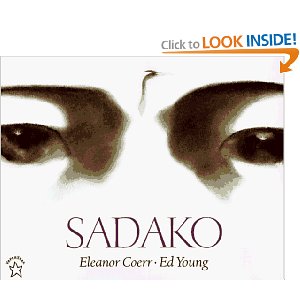
Today many authors of picture books tackle subjects such as death, dying, war, and homelessness. Are these subjects appropriate for younger children? Maurice Sendak's We are all in the Dumps with Jack and Guy depicts homelessness and includes images from the Holocaust. Eleanor Coerr's Sadako tells the story of a Japanese girl who contracts leukemia and dies following the bombing of Hiroshima. Maira Kalman's Fireboat and Jeannette Winter's September Roses are stories that depict the destruction of the World Trade Center. (Also see Sami and the Time of the Troubles by Florence Parry Heide, Hiroshima No Pika by Toshi Maruki, and Rose Blanche by Roberto Innocenti. Another author who tackles tough subjects like homelessness, racial tension, discrimination, and war is Eve Bunting.) 


You can read part of each of these books on Amazon.com by clicking on the links above. Book cover images from Amazon.


Try to read at least one of the titles mentioned above, or a book with a similarly difficult subject.


We would love to hear from teachers and students about your thoughts about this topic. Please leave a comment, answering one or more of these questions.


Is there a place for such books in your classroom? Why or why not? If you decide such books are important, with what ages would you share such books? 

How would you introduce these titles to your students? 

 What role can and do the illustrations play in mediating the difficult topic the book presents to children?


Talk Point from Charlotte Huck's Children's Literature by Barbara Z. Kiefer

Tuesday, July 3, 2012

Captain Underpants, Twilight, and Book Choice


According to a report by Publisher's Weekly books such as Dav Pilkey's Captain Underpants, Barbara Park's Junie B. Jones and the Twilight series by Stephanie Meyer are among the best selling books for children. If you look at the best books of the year chosen by the American Library Association, or those chosen by book review journals such as School Library Journal, The Horn Book, or Booklist you will not find any of these titles. (Diane Roback "Big Names Top the Charts," March 24, 2003.)

What is the role of books like these (best selling books for children) in developing and deepening children's response to literature?


Do you (or would you) include them in your classroom library?

Do you (or would you) read these best sellers aloud or include them as selections in book groups? 


Discussion question from Charlotte Huck's Children's Literature by Barbara Z. Kiefer, Tenth Edition